Blog / Thermal Imaging
Thermal Imaging for Home Inspections
During training, I’ve often told students that the only tools a home inspector truly needs to competently perform an inspection are a flashlight and something pointy. The flashlight lights up dark spaces; the pointed object lets you probe damaged materials and investigate soil. Everything else is an enhancement — and among those enhancements, the thermal imaging camera stands out.
Try it: drag the slider on any image below to wipe between the standard photo and what the thermal camera sees.
The basics of thermal imaging
Thermal imaging (or infrared) cameras use specialized sensors and lenses to measure the infrared radiation coming off of objects. That data is turned into an image representing the temperature distribution across the camera’s field of view. Because the camera reads heat rather than light, the resulting images look the same regardless of lighting conditions. In effect, infrared technology lets us visualize invisible heat patterns.
Choosing a camera
Thermal cameras range widely in price — from phone attachments to precision standalone units costing well into five figures. Resolution and the level of control are the main things that separate them. Most devices offer enough resolution for basic thermal inspection, but lower-end options tend to be slow and unreliable over a full inspection. For professional work, cameras like the FLIR E8-XT strike a good balance of resolution and affordability.
An important limitation
Despite the common misconception, infrared cameras cannot see through walls. Their effectiveness also drops when the outdoor temperature is close to the indoor temperature, because the image is a representation of temperature differences between materials. That especially affects evaluating the interior envelope and detecting moisture.
Where thermal imaging earns its keep
Moisture
Thermal imaging doesn’t detect moisture directly — it visualizes heat patterns. An experienced inspector uses those patterns to identify temperature anomalies consistent with moisture, then confirms with a moisture meter.
Plumbing
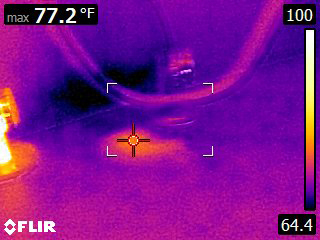
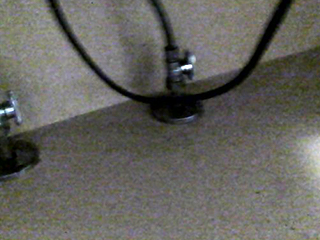
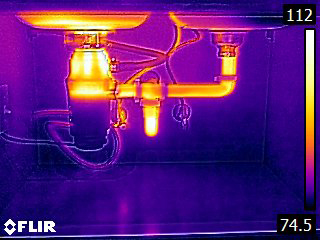
Running hot water while scanning with the camera can reveal problems through dramatic temperature differences.
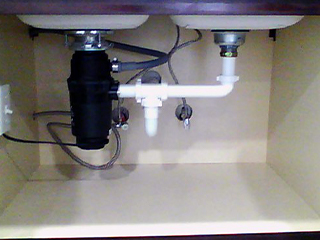
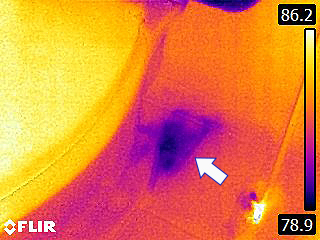
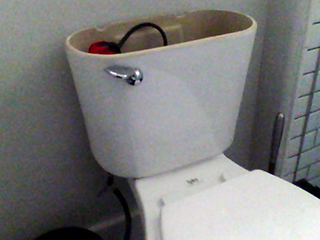
On one inspection this method revealed a toilet leaking at its base, where no visible evidence of leakage was found.
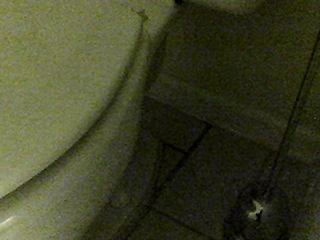
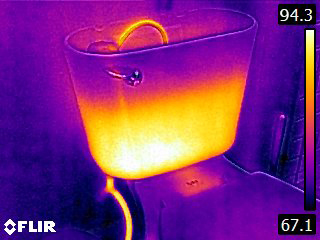
On another, it showed a toilet plumbed to the hot water supply instead of cold — wasteful, but invisible without thermal assistance.
Insulation
Thermal imaging highlights gaps and voids in ceiling and wall insulation. In summer, Tennessee attics can exceed 150°F, which makes insulation deficiencies obvious.
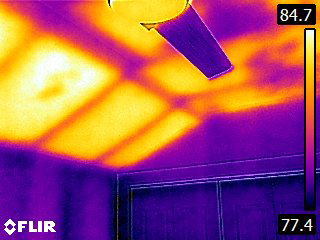
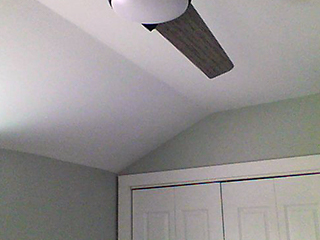
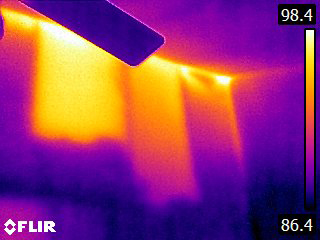
Missing wall insulation is especially visible where a wall adjoins a hot attic space, with only drywall between the living area and extreme heat.
Testing and measurement
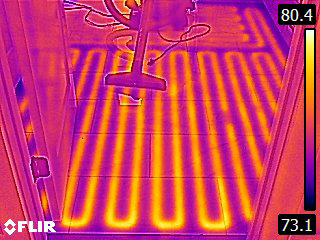
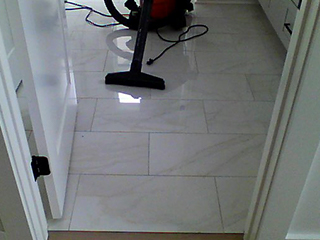
The camera also verifies that systems are working — electric floor heating in new construction, stove elements, hot water temperatures, and HVAC operation all read clearly in infrared.
The bottom line
Applied by a properly trained inspector, thermal imaging meaningfully improves how we recognize and report defects — which is exactly why we include it on every BNA inspection at no extra charge.